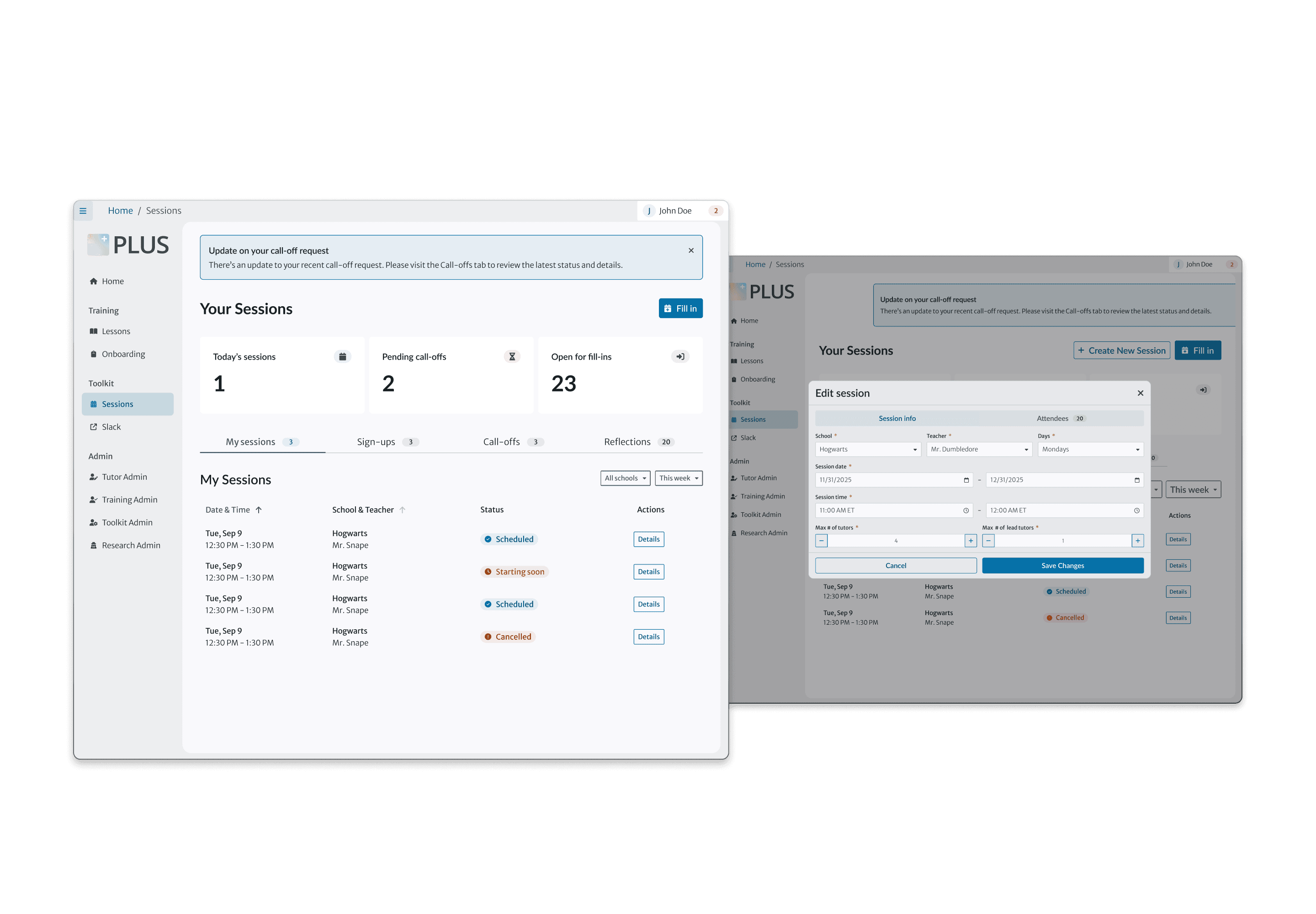
PLUS - Session Management
CONTEXT
PLUS is a virtual tutoring platform that aims to bridge gaps in math education, empowering middle school students with AI technology and research-backed methods.
DETAILS
TIMELINE
August 2025 - December 2025
ROLE
Product Designer working with Product Manager
PROBLEM
PLUS’s fragmented session management forces tutors and supervisors to use spreadsheets, third-party tools, and manual updates
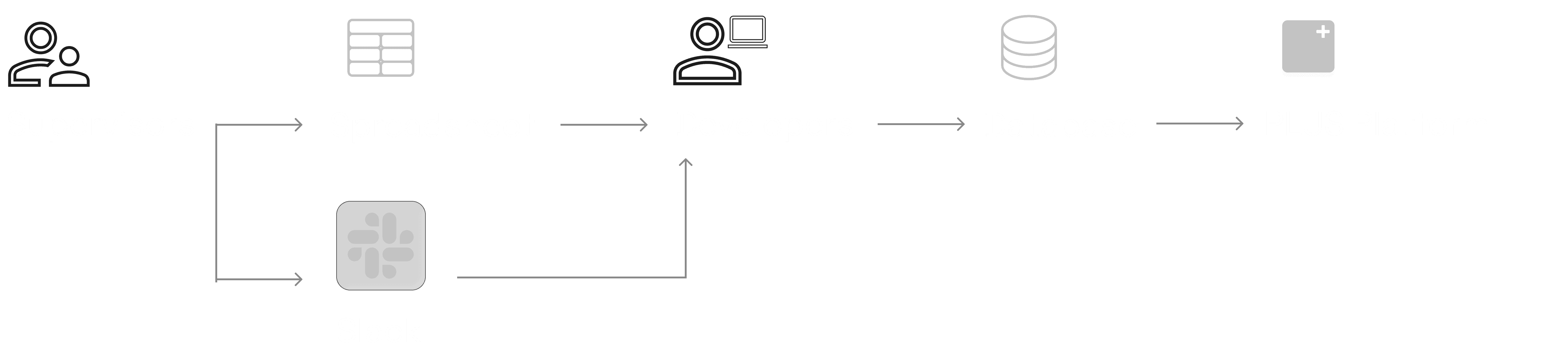
Creating, Editing, and Cancelling Sessions
To create, edit, or cancel sessions, supervisors filled out spreadsheets or messaged developers on Slack, then waited for manual database updates to reflect changes in PLUS.
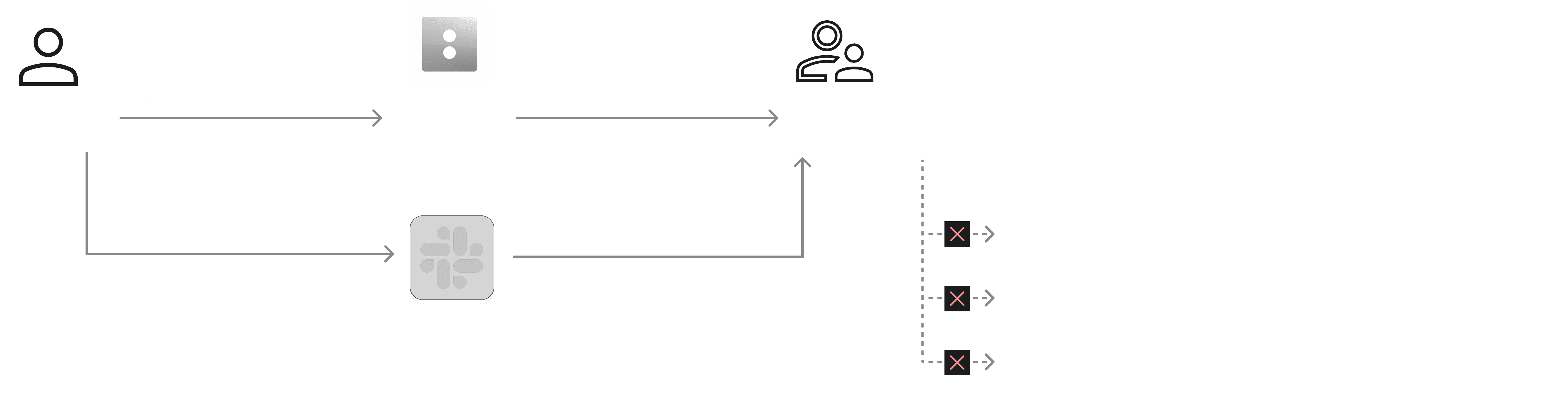
Session Call-offs
Session call-offs also required fragmented use of other platforms to manage call-offs, and still lacked critical missing features.
THE PREFERRED STATE
Session Management
Embedding session management directly into the platform streamlines workflows for supervisors, tutors, and developers.

HOW SHOULD SESSIONS BE MANAGED?
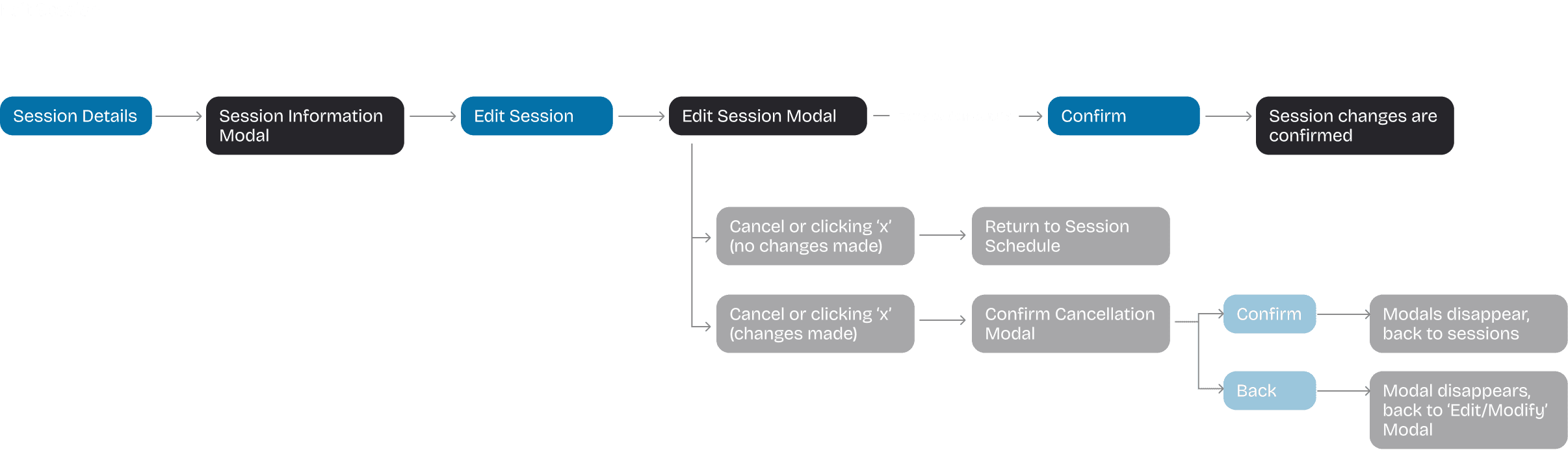
Since sessions already existed on the platform, defining management flows was straightforward: a “Create New Session” button on the dashboard and edit/delete actions on individual sessions.
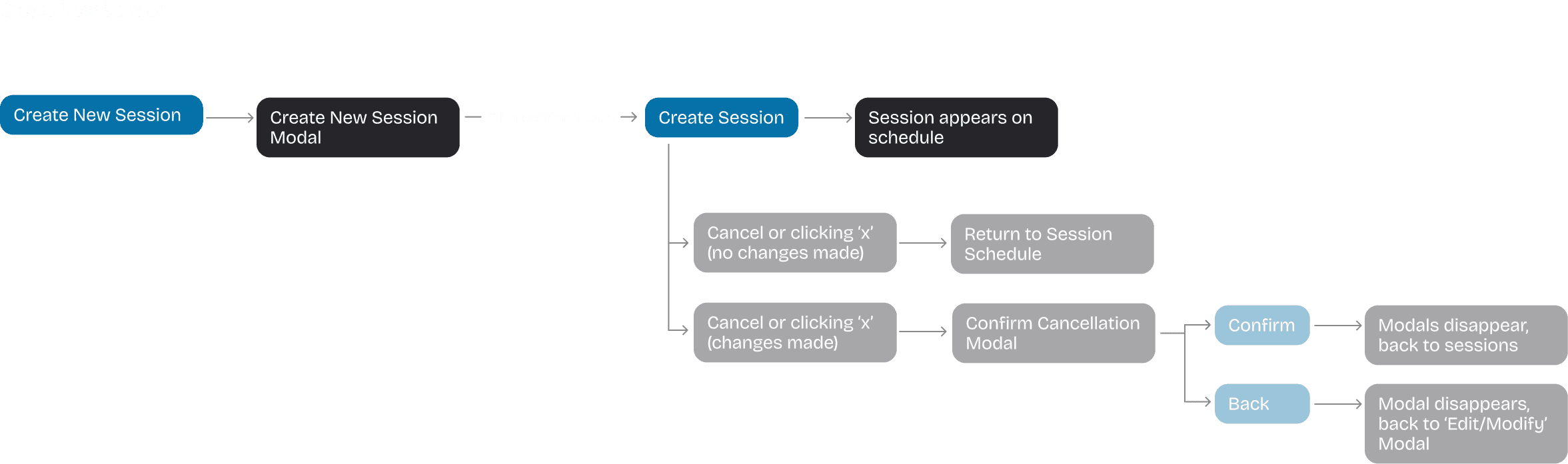

HOW SHOULD CALL-OFFS BE RECEIVED AND MANAGED?
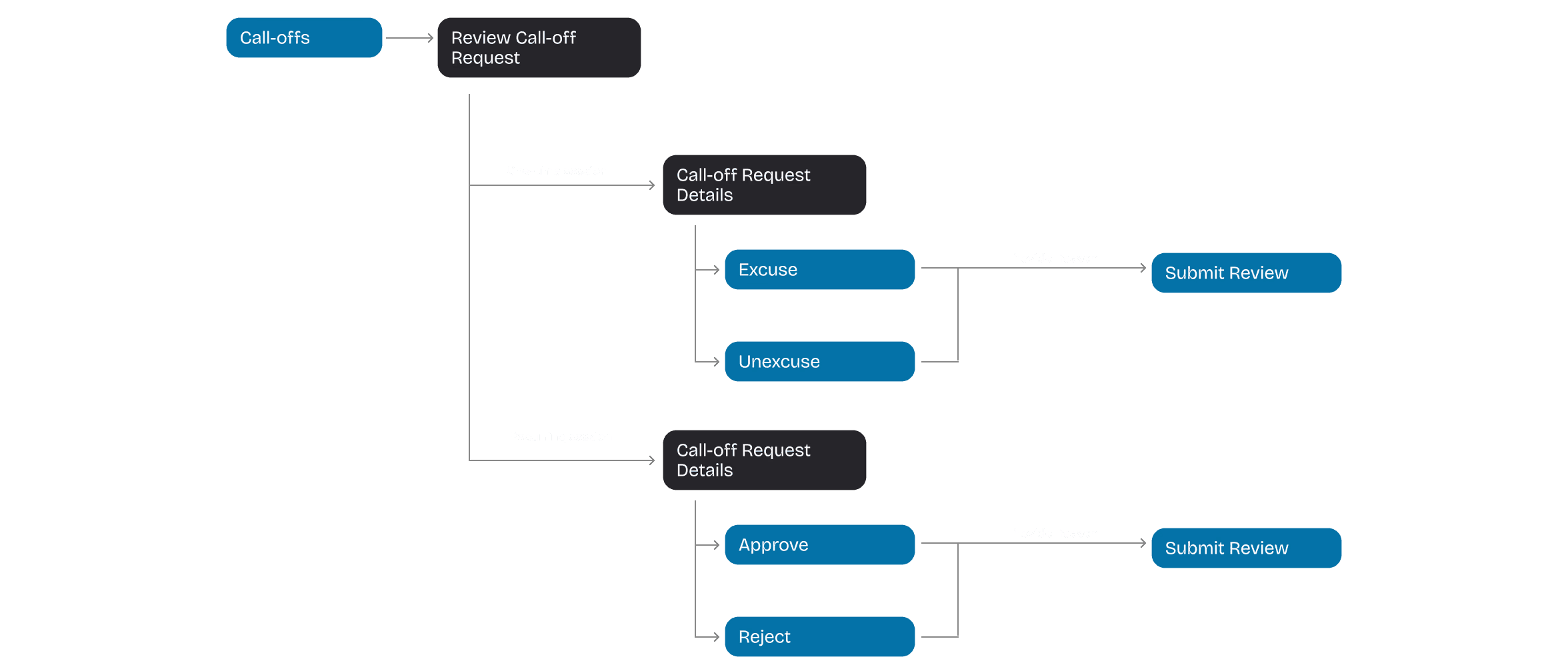
I designed the call-off flow to clarify how tutors and supervisors interact with the system and which screens were required. Tutors follow different flows for one-time versus recurring call-offs, while the supervisor review process remains largely the same.
TUTOR
One-time Session

Recurring Session

SUPERVISOR
One-time & Recurring Sessions
AI PROTOTYPING & TESTING
I jumped straight into high-fidelity prototypes using an AI prototyping tool (Figma Make). I recorded demo videos of my prototypes and sent them to supervisors to iterate based on their feedback.
FEEDBACK & IMPROVEMENTS
A few days later, I got feedback from the supervisors on my prototypes and improved upon them:
ADDING/EDITING TUTOR & STUDENT ROSTER
Not only does it make managing session participants easier for regular sessions, but it makes it much easier to manage for sessions that have been edited.
BEFORE
AFTER
BULK SESSION CANCELLATIONS
Sessions are rarely one-off cancellations - supervisors usually cancel them for the day or for holiday weeks based on a student's school schedule.
BEFORE
AFTER
TUTOR AVAILABILITY RECONFIRMATION
For sessions that have their start time changed, short delays (5–10 minutes) aren’t an issue, but longer delays (1–2 hours) should allow tutors to reconfirm or decline to respect their time.
BEFORE
AFTER
SOLUTION
I designed a centralized in-platform session management system that improved visibility, capacity planning, and reduced operational overhead.
SUPERVISORS
Add, edit, and cancel session functionality
TUTORS
Receive updates & reconfirm availability for session time changes
IMPACT
REFLECTIONS & LEARNINGS
Jumping straight to high-fidelity prototypes can be effective.
When the problem is well understood, user flows are defined, and a design system is in place, AI-powered prototyping enables rapid, user-tested iteration by giving users a clearer sense of the final product—saving time over wireframing and lo-fi prototyping.
Get engineers involved early in the process.
Sharing demo videos of prototypes with developers before handoff revealed technical constraints I wouldn't have caught otherwise, which saved time and prevented rework.